
The Saudi Arabian Cupboard has given the nod for the primary cross-border electrical high-speed passenger railway that may hyperlink its capital Riyadh with Qatar’s Doha. The initiative is a part of a broader effort to strengthen the rail community throughout the Gulf Cooperation Council (GCC) international locations.
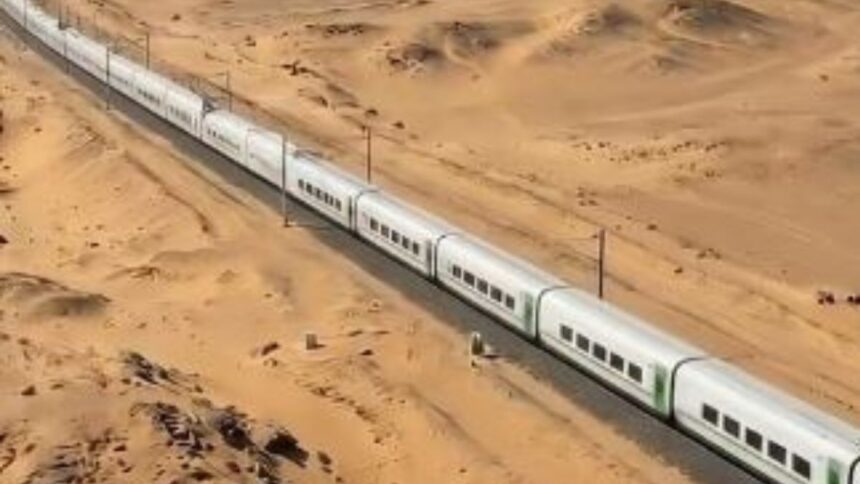
The 785-km route lies in a number of the harshest desert terrain and can contain excessive engineering ways, together with sand mitigation, building of intensive viaducts, elevated tracks and aerodynamic sand boundaries.
Because the line is electrical, the road will necessitate the set up of a steady Overhead Catenary System (OCS) and a collection of high-voltage traction substations (TPS) spaced at common intervals by way of distant areas.
Connection Riyadh and Doha
The deliberate railway line will join Riyadh and Doha and different key stations in Hofuf and Dammam. It can additionally hyperlink King Salman Worldwide Airport in Saudi Arabia with Hamad Worldwide Airport in Qatar. As soon as operational, the practice will journey at speeds exceeding 300 km/h, which suggests the journey time between Riyadh and Qatar will probably be solely two hours.
A strategic funding, the railway line is anticipated to serve greater than 10 million passengers yearly, create over 30,000 direct and oblique jobs, and add roughly $30.7 billion to the mixed GDP of Saudi Arabia and Qatar.
The authority not too long ago introduced plans for a 2,117-kilometre freight railway linking all Gulf Cooperation Council (GCC) international locations by 2030, positioning rail as a spine of regional commerce and logistics. Past passenger journey, the Saudi-Qatar line will help cargo motion, decrease transport prices and strengthen regional provide chains, easing stress on street transport whereas stimulating tourism and logistics sectors in each international locations.
The challenge is taken into account not solely a diplomatic gesture however a strategic plan to shift regional transport away from the 600-kilometre desert freeway and short-haul flights, in direction of a high-capacity, sustainable electrical traction system.