
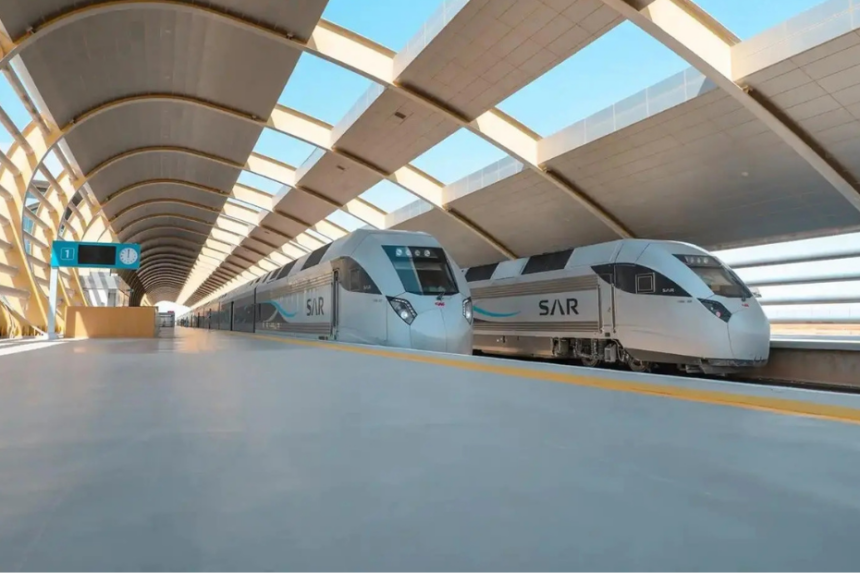
Picture credit score: Saudi Press Company/Web site
Saudi Arabia is getting into a brand new section of transport infrastructure improvement as railways and concrete transit tasks regain momentum after years of recalibration.
With financial diversification, logistics effectivity, and quality-of-life enhancements excessive on the nationwide agenda, authorities are repositioning rail and metro techniques as essential enablers of progress slightly than standalone transport property.
Learn more-Riyadh Metro extension: 5 new stations introduced
Throughout intercity corridors, freight networks, and concrete facilities, a collection of coordinated initiatives is reshaping how individuals and items transfer throughout the dominion. These efforts mirror a broader shift towards long-term infrastructure planning underneath Saudi Imaginative and prescient 2030, as policymakers search to unlock productiveness positive aspects, cut back congestion, and combine transport techniques with airports, industrial zones, and inhabitants facilities.
On the heart of this transformation is Saudi Arabia Railways (SAR), which is overseeing main upgrades to passenger capability, operational effectivity, and regional connectivity, whereas city authorities transfer to revive long-delayed metro developments. Collectively, these tasks illustrate how transport funding is more and more considered as a strategic financial lever, one which helps commerce, tourism, labor mobility, and concrete competitiveness.
Riyadh–Jeddah land bridge to be delivered in phases
One of the vital strategically important tasks stays the Riyadh–Jeddah Land Bridge, designed to attach the capital with the Crimson Beach by way of a high-capacity rail hall. Talking on the tv program Fi Al Surah (“Within the Image”), SAR CEO Bashar bin Khalid Al-Malik mentioned the venture shall be delivered by way of a brand new phased mechanism, with completion anticipated earlier than 2034.
Al Malik confirmed that no settlement has been reached with a Chinese language alliance beforehand linked to the venture, citing the consortium’s failure to fulfill native content material necessities. The shift highlights SAR’s emphasis on localization, home worth creation, and compliance with nationwide procurement requirements because it advances large-scale infrastructure initiatives, a Saudi Gazette report mentioned.
Regardless of the revised supply method, the land bridge stays a cornerstone of Saudi Arabia’s rail technique, anticipated to boost freight motion between industrial hubs and ports whereas supporting sooner passenger journey between two of the dominion’s most economically important cities.
Freight realignment and neighborhood concerns
Past megaprojects, SAR has additionally carried out focused operational modifications to mitigate the social impression of increasing rail exercise. Al Malik mentioned freight practice operations have been relocated away from Hofuf to enhance residents’ high quality of life, with the venture accomplished final 12 months.
The transfer displays a rising emphasis on integrating neighborhood concerns into infrastructure planning, significantly as rail networks broaden into densely populated areas. Managing noise, security, and land-use considerations has change into an more and more vital side of community optimisation.
Addressing station placement within the northern areas, Al Malik defined that the Al Jouf station’s distance from Sakaka metropolis stems from the railway’s unique goal of serving the mining sector, with passenger companies included later into the design.
Increasing capability on the northern railway community
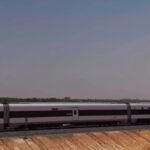
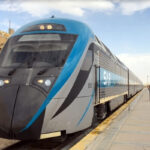
As passenger demand grows, SAR is transferring to considerably broaden capability throughout its networks. The corporate has issued a young for the manufacturing of 10 new passenger trains for the Northern Community, overlaying design, manufacturing, provide, and fleet upkeep companies.
The tender, with bids due by Might 11, 2026, aligns with the Nationwide Transport and Logistics Technique and the targets of Saudi Imaginative and prescient 2030. In accordance with SAR CEO Dr Bashar Al Malik, increasing the passenger practice fleet is a strategic precedence to assist rising intercity journey, a Saudi Press Company report mentioned.
As soon as operational, the brand new trains are anticipated to extend the Northern Community’s capability to almost 3 times its present stage, elevating whole seating capability to greater than 2.4 million seats yearly. The community spans roughly 2,700 kilometers, connecting Riyadh, Al Majmaah, Qassim, Hail, Al Jouf, and Al Qurayyat, with plans so as to add new passenger stations, together with Al Zulfi.
The initiative follows the continuing manufacturing of 10 new passenger trains for the Jap Line, reflecting SAR’s phased method to modernizing rolling inventory and bettering service reliability throughout the nationwide rail system.
Excessive-speed regional connectivity and airport integration
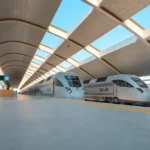
Saudi Arabia’s rail ambitions lengthen past home journey to regional connectivity. Al-Malik highlighted the Riyadh–Doha practice as the primary high-speed rail service within the area linking two nations. Working over a 785-kilometer community, the road serves Hofuf and Dammam and reaches speeds of as much as 300 kilometers per hour.
The venture connects King Salman Worldwide Airport in Riyadh with Hamad Worldwide Airport in Doha, strengthening integration between air and rail transport and reinforcing Saudi Arabia’s function as a regional mobility hub. The hall is designed to assist passenger flows between main cities whereas enhancing broader financial ties.
Workforce improvement and operational scale
SAR’s operational obligations additionally lengthen to seasonal transport calls for. Al Malik mentioned the corporate was tasked by a Council of Ministers resolution with working the Mashaaer Prepare throughout Hajj, noting that the service was delivered throughout the latest season with 100% Saudi manpower.
Described as among the many largest practice techniques on the earth, the Mashaaer Prepare can carry round 3,000 passengers per journey, underscoring SAR’s potential to handle high-volume, time-sensitive transport operations.
Al-Malik additionally highlighted the increasing function of girls within the rail sector, noting their sturdy efficiency in working the Haramain Excessive Pace Railway. SAR has launched coaching applications for Saudi ladies to function high-speed trains, with participation exceeding expectations.
Jeddah Metro revival alerts city transport push
Parallel to nationwide rail growth, Saudi Arabia has revived plans for the long-awaited Jeddah Metro, signaling renewed concentrate on city public transport. Authorities have issued a preliminary design consultancy tender for the venture’s Blue Line, with proposals due by March.
The Blue Line will lengthen roughly 35 kilometres, linking King Abdulaziz Worldwide Airport with the Haramain Excessive-Pace Railway station by way of 15 stations. The venture is being led by the Jeddah Growth Authority and goals to strengthen connectivity between air journey, intercity rail, and key city areas.
A venture reawakened after years of assessment
Plans for the Jeddah Metro date again to the early 2010s and have been included right into a broader public transport program round 2013–2014. Early progress included preliminary engineering by Systra, a SAR276m consultancy contract awarded to Aecom, and station design by Foster + Companions in 2015.
Nevertheless, the venture slowed as authorities spending priorities have been reassessed following oil worth declines. Subsequent opinions of scope, price, and supply fashions led to a protracted pause.
Early designs envisioned a four-line community spanning greater than 161 kilometers, with 81 stations and 197 trains. Along with the Blue Line, the system consists of the Orange, Inexperienced, and Crimson traces, integrating metro companies with wider city mobility plans.
Taken collectively, the revival of the Jeddah Metro, growth of passenger rail fleets, and phased supply of flagship tasks such because the Riyadh–Jeddah Land Bridge mirror a coordinated shift in Saudi Arabia’s transport technique. By aligning infrastructure funding with localization targets, operational effectivity, and concrete livability, the dominion is positioning rail and metro techniques as foundational property in its long-term financial transformation.