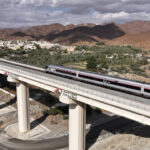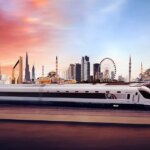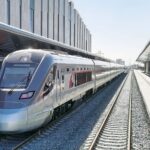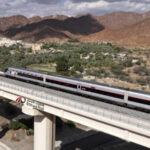


A imaginative and prescient of connectivity and progress
In a submit on his official X account, Sheikh Mohammed wrote: “We have now made the journey from Dubai to Fujairah on the Etihad Rail passenger practice… The practice will join 11 cities and areas throughout the UAE, from Al Sila to Fujairah, with a velocity of 200 km/h. It’s anticipated to hold 36 million passengers yearly by 2030.”
He added: “I’m pleased with our nationwide initiatives. I’m pleased with the Etihad Rail crew led by Sheikh Theyab bin Mohamed bin Zayed. And I’m pleased with a nation that by no means stops working — one which provides a brand new brick to its future infrastructure each single day.”
Decreased journey instances and enhanced mobility
Based on Etihad Rail, the passenger community will considerably reduce journey instances between main cities. The journey from Abu Dhabi to Dubai will take simply 57 minutes, whereas the journey from Abu Dhabi to Fujairah is anticipated to take round 105 minutes.
The venture goals to strengthen city connectivity, scale back reliance on automobiles and vans, and improve sustainable mobility throughout the UAE.
Enhance to home tourism
The passenger service can be projected to spice up home tourism by connecting residents to the UAE’s numerous locations. Officers estimate this might generate Dh24 billion in tourism income over the following 50 years.
Past comfort, the railway is seen as a pillar of long-term financial and environmental transformation.
As a part of the Dh50 billion Nationwide Railways Programme, the complete passenger and freight community is anticipated to unlock Dh200 billion in financial advantages over 5 a long time.
This consists of Dh100 billion in decreased transport prices and journey instances, Dh22 billion in financial savings from fewer street accidents, Dh23 billion in improved land entry and concrete planning, and Dh8 billion in decrease street upkeep prices.
Environmental affect and emissions discount
Every freight practice will eradicate as much as 300 vans from UAE roads, easing congestion and lowering air pollution.
The federal government initiatives that the rail system will reduce land transport emissions by 21 per cent yearly by 2050, the equal of 8.2 million tonnes of CO₂ emissions annually.